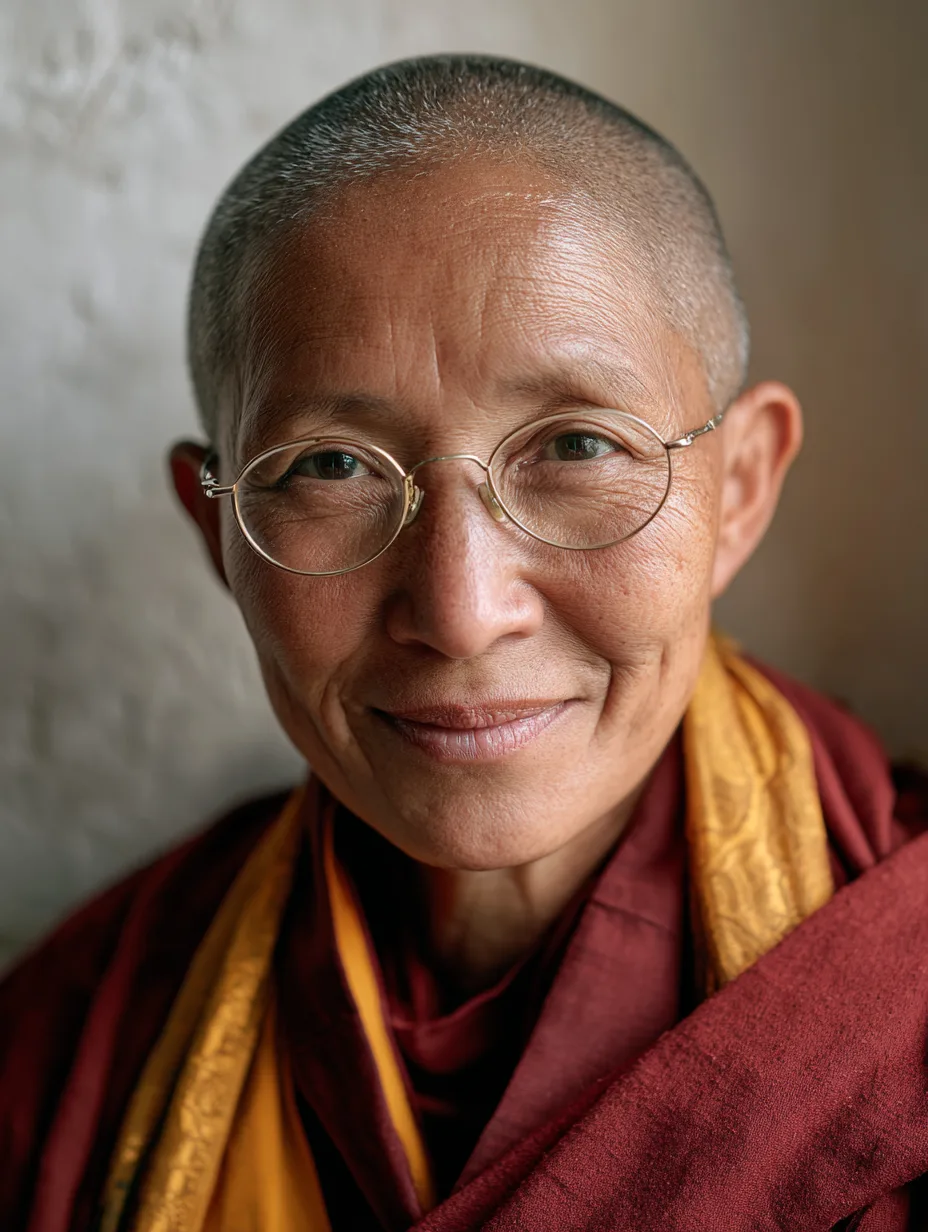
I sat in a brightly lit classroom in Zurich wearing my maroon robes. The air felt crisp against my face. Outside the large glass window, electric trams slid quietly past the gray waters of the lake. Inside the room, we were studying trauma. The instructor projected detailed anatomical slides of the human nervous system onto a large screen. We were learning Stephen Porges and his Polyvagal Theory. I listened carefully to the descriptions of the vagus nerve wandering through the viscera. I took notes in a small paper notebook while my classmates asked questions. A quiet realization settled in my chest as I matched the diagrams to the texts I chanted every morning. They were describing lung disturbance. The language was entirely different. The biology was identical. Tibetan medicine recognizes wind energy, or lung, moving through the subtle channels of the body. Severe trauma disrupts this wind. The ancient medical texts document clearly how fear freezes the breath and knots the channels. Western science now plots this same phenomenon on a neurobiological map.
Dr. Porges divides the autonomic nervous system into three distinct states of operation. The oldest defensive circuit is the dorsal vagal complex. This creates the freeze response. When an animal is trapped in a corner without an escape route, its biology chooses to shut down to minimize physical pain. The heart rate drops dramatically. Breathing becomes shallow and faint. In human beings, this biological collapse looks like severe depression or clinical dissociation. The middle system is sympathetic activation. This governs the fight-or-flight response. The body floods the bloodstream with adrenaline and cortisol. The heart races to prepare the muscles for immediate action. The newest evolutionary system is the ventral vagal complex. This state governs social engagement and safety. When this circuit is active, we feel entirely safe. We can make direct eye contact without fear. We can listen to the timber of a human voice while our facial muscles soften.
A 2022 Lesley University thesis by a somatic psychology researcher mapped these biological states directly onto early Buddhist psychology. The researcher made a precise alignment between our neuroanatomy and the ancient texts. The ventral vagal state corresponds directly to sati. Sati is mindful presence. It signifies the rare capacity to be right here without needing to run away. The sympathetic nervous system aligns with dosa. Dosa translates to aversion or reactivity. We push away what we do not want. The dorsal vagal state represents moha. Moha is delusion or ignorance. It is a heavy disconnection from physical reality. A thick psychological fog settles over the mind to mask the contours of the present moment.
I see this thick fog every single day in my therapy clinic in Dharamsala. Many of my clients are Tibetans who crossed the high Himalayas on foot. They survived freezing temperatures in the snow. They survived the constant threat of border guards. Their nervous systems learned to shut down entirely to survive the terror. They live walking around in a permanent dorsal vagal collapse. Moha protects them from feeling the unbearable pain of their history by dulling all sensory input. Western trauma therapy attempts to bring them out of this deep freeze. We use gentle movement and sound. The clinical goal is to move up the biological ladder. We climb from the dorsal freeze up into sympathetic activation. We then attempt to move from that sympathetic charge up into ventral safety. This ascending biological path matches the exact structure of the Buddha's most famous meditation manual. The Satipatthana Sutta serves as a 2,500 year old text. We usually read it as spiritual instruction. It serves just as effectively as a biological protocol for physical nervous system recovery.
The Upward Path of Biology
The Buddha begins his instruction with Kayanupassana. This is the continuous mindfulness of the physical body. He instructs the practitioner to go to the forest or the root of a tree. The very first instruction is merely to breathe.
Breathing in long, he discerns, 'I am breathing in long.'The attention anchors entirely in physical sensation. When a person is trapped in dorsal vagal shutdown, traditional cognitive therapy usually fails. The speech centers of the brain turn off under extreme threat. The body goes entirely numb. You cannot think your way out of a freeze state. You must feel your way out through the tissues. We start the work with the breath. We notice the physical posture. The Buddha mentions walking, standing, sitting, and lying down. We track the earth element holding us up. We feel the heavy weight of the bones pressing against the wooden floor. This bottom-up sensory signaling tells the brain stem that the body is not currently dying. The ice begins to crack as the blood vessels slowly dilate.
I treated a young man from Canada last year who carried intense emotional abuse from his childhood. He decided to do a silent thirty-day retreat at a local meditation center up the mountain. He sat on a cushion for ten hours a day trying to force his mind into quietness. Within a week he began to dissociate heavily. His posture slumped forward. His eyes grew glassy and unfocused. He completely stopped feeling his legs. He thought he was achieving a state of deep spiritual emptiness. He came into my clinic to boast about his rapid progress. He told me he felt nothing at all. He believed he had reached a high state of detachment. I looked at his pale skin and noticed his shallow breathing. His voice lacked any melodic variation. He was not spiritually advanced at all. He was trapped in a massive dorsal vagal collapse. His nervous system simply could not handle the silence. The silence felt exactly like the terrifying isolation of his childhood abuse. His neurobiology triggered a survival freeze. He was drenched in biological moha. This creates a dangerous trap where biological bypass masquerades as spiritual detachment.
I had to stop his meditation practice immediately. I told him to stand up from the chair. We walked outside into the muddy streets of McLeod Ganj. We avoided the stray dogs wandering the alleys. We listened to the auto-rickshaws honking loudly near the temple. I made him hold a warm cup of hot black tea. I asked him to feel the heat transferring from the ceramic directly into his palms. We were practicing Kayanupassana. I needed strong bottom-up sensory input to break the dorsal vagal freeze. I needed his brain stem to register the present reality of the hot cup in his hands. Slowly the color returned to his cheeks. The heat dilated his capillaries. As he thawed out of the freeze, the trapped sympathetic energy rushed into his system. He started to cry heavily. He then became incredibly angry. He crushed the empty paper cup in his fist. He began cursing his parents and the meditation center. The trapped animal was finally shaking off the predator's attack. This was dosa manifesting as pure fight-or-flight arousal.
If we had stopped the session there, he would have remained a helpless victim of his own rage. We moved directly to Vedananupassana. This is the second foundation focusing on feeling-tones. Every sensory experience carries a raw biological charge. It registers as pleasant, unpleasant, or neutral. We do not yet attach a story to the feeling. We do not analyze why we feel sad. We simply note the biological fact of the unpleasantness. I asked him where the anger lived in his body. He pointed to a crushing weight located in his throat. I asked him to simply observe the unpleasantness of that pressure. He sat with the raw feeling-tone. He did not tell the story of his father. He just felt the throat pressure as a physical event. The insula in his brain began to track his internal state without panic. The sympathetic charge began to slowly dissipate.
Peter Levine developed Somatic Experiencing to discharge this exact kind of survival energy. It operates as a brilliant system of biological regulation. My SE teacher in Switzerland spoke softly when guiding us. She asked us where we felt a physical resource in our bodies. She taught us to pendulate between the resource and the trauma. The Buddha taught this exact physiological titration. He instructed us to know the pleasant feeling. He instructed us to know the unpleasant feeling. He guided practitioners to switch the attention between them. He understood that a sudden plunge directly into the center of a trauma would only cause another immediate freeze. The nervous system would collapse into moha once again. The titration builds distress tolerance in the tissues. Eventually my Canadian client took a deep, spontaneous breath. His tense shoulders dropped. He looked over at me. His eyes were clear and entirely present. The ventral vagal network was finally back online. Sati was present in the room.
The Empty Nature of the Freeze
We then move into the third foundation called Cittanupassana. This involves the clear observation of mind-states. The energy continues to rise and fall. The body might still tremble slightly. The mind desperately wants to attach an enemy to