It is four in the afternoon on a Tuesday in Boulder, and the light is doing that specific local trick where it hits the Flatirons and turns the whole room the color of weak tea. The guy sitting across from me - let's call him Mark - is staring at a knot in my hardwood floor. Mark's wife died of ovarian cancer six months ago. He is wearing a fleece vest that looks like he has slept in it since November. I am watching the way his jaw muscles clench and release. He is waiting for me to say something clinically useful to make the anvil on his chest lighter.
Most of the time we therapists sit in these chairs and dispense tissues while nodding with aggressive empathy. We are taught to hold space. But sometimes holding space is just a polite way of watching someone drown in a very expensive room. Grief of this magnitude is a physical assault. It breaks down the immune system. It rewires the basal ganglia. It turns the world into a hostile architecture of empty spaces where the dead person is supposed to be.
I usually wait until the fourth or fifth session to tell the story of Kisagotami. Mark is ready for it. Or at least he is entirely sick of talking about the stages of grief, which Elizabeth Kübler-Ross actually designed for the dying rather than the bereaved anyway.
The story comes from the Dhammapadatthakatha, the ancient commentary on the Theravada Buddhist texts. Kisagotami was a young mother in the city of Savatthi. Her infant son died suddenly. She lost her mind completely. She refused to accept the death and carried the rotting corpse of her baby strapped to her hip from house to house. She begged her neighbors for medicine to cure him. People laughed at her. They slammed their doors. Finally a wise old man took pity on her and told her to go see the Buddha, who was staying in the Jeta Grove.
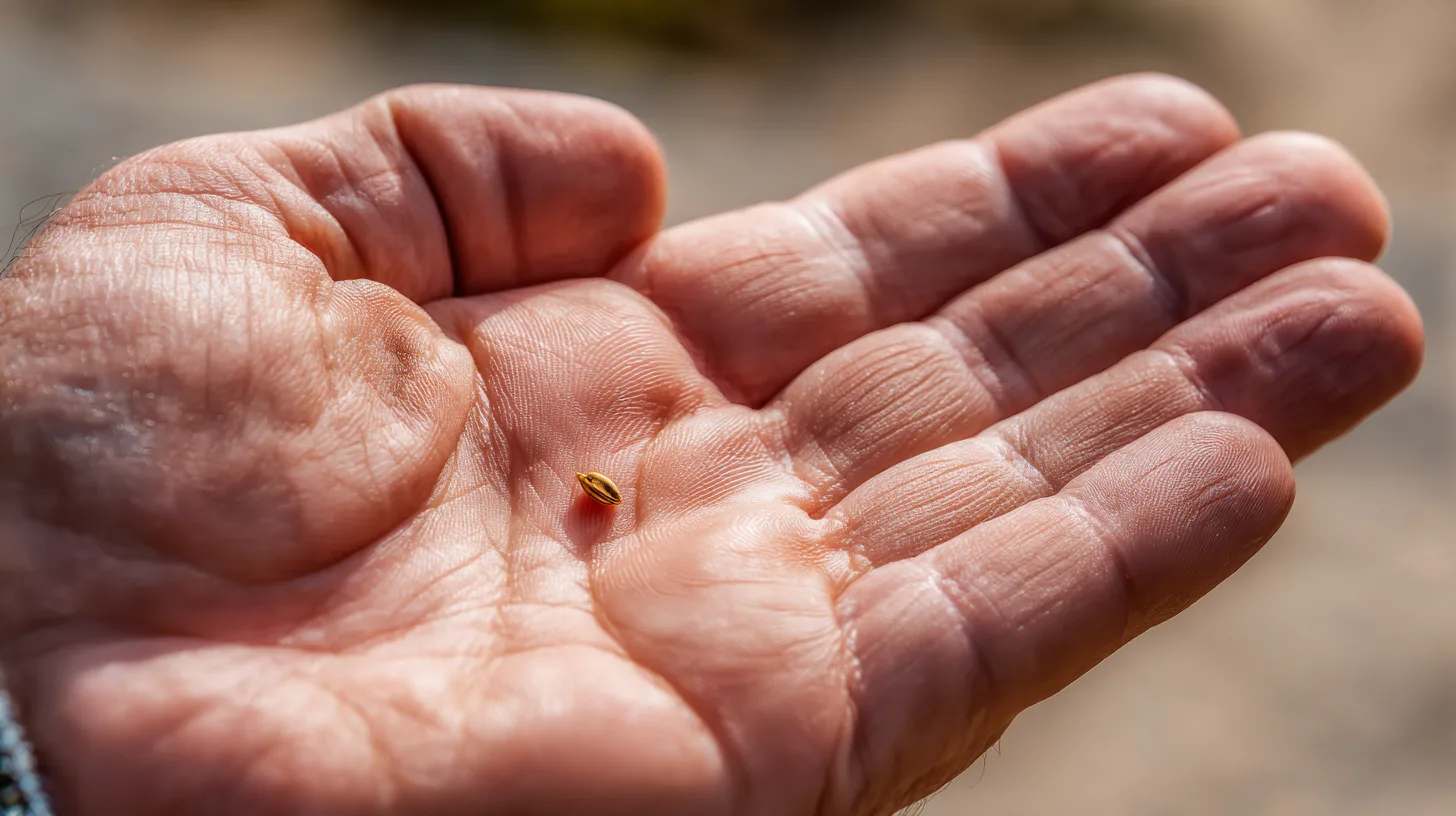
She walks into the grove smelling of decay and asks the Buddha for medicine. The Buddha looks at her and says he can make the medicine, but he requires a specific ingredient. He needs a handful of mustard seeds. Kisagotami is thrilled. Mustard seeds are incredibly cheap and common. She turns to run to the market, but the Buddha holds up a hand and gives her one condition. The seeds must come from a house where no one has ever died.
You probably know the end of the parable. She goes to the first house and asks for the seed. The family says yes, of course, here is a whole sack of it. She asks if anyone has died in the house. The homeowner says they just buried their grandfather last month. She gives the seed back. She goes to the next house. A daughter died there. The next house. A husband. She walks through the entire city. Slowly the reality of universal mortality sets in. She leaves the body of her child in the charnel ground, returns to the Buddha, and gets ordained.
Western mindfulness culture usually strips this story down to a platitude about letting go. We read it as a brutal lesson in detachment. See, everyone dies, so stop clinging to your baby. That interpretation is clinical malpractice and philosophical bullshit.
When I was studying at the Viktor Frankl Institute in Vienna, we spent a lot of time talking about the exact mechanics of how humans derive meaning from suffering. Frankl called it logotherapy. The Buddha was not doing a magic trick to force Kisagotami to forget her child. He was executing a highly specific psychological intervention that perfectly mirrors what modern bereavement researchers call the continuing bonds model.
For most of the twentieth century, the psychiatric establishment operated under the shadow of Sigmund Freud's 1917 essay Mourning and Melancholia. Freud argued that the goal of mourning was decathexis - the withdrawal of emotional energy from the deceased object. You were supposed to sever the ties. If you kept talking to your dead husband or keeping his shoes by the door, you were failing at grief. You were stuck in melancholia.
It took until 1996 for the field to formally realize how damaging that was. Dennis Klass, Phyllis Silverman, and Steven Nickman published a book called Continuing Bonds: New Understandings of Grief. They proved through extensive clinical observation that we do not actually sever our ties with the dead. Healthy mourning requires us to relocate the deceased in our psychological lives. We build a new relationship with them. They stop being a physical presence and become an internal reality.
Kisagotami was stuck in a pathological loop because she was trying to interact with her baby entirely in the physical realm. By sending her door to door, the Buddha was forcing her to engage in meaning reconstruction. Robert Neimeyer, a psychologist at the University of Memphis, writes extensively about this. When someone dies, the narrative of our life is shattered. The therapeutic goal is to rebuild a coherent narrative that integrates the loss. Kisagotami's narrative was hyper-focused on her specific, isolated tragedy. By speaking to dozens of other grieving people, she was forced to contextualize her personal loss within the universal human condition.
She did not drop the baby in the woods because she magically stopped loving him. She left him there because she finally understood the grammar of the situation she was in.
The Ritual of Oscillation
Psychologists Margaret Stroebe and Henk Schut developed something called the Dual Process Model of Coping with Bereavement in 1999. I use it constantly in this room. They found that grieving people naturally oscillate between two types of stressors. There are loss-oriented stressors, which involve crying, looking at old photographs, and dwelling on the pain. Then there are restoration-oriented stressors - doing the laundry, paying the electric bill, learning how to cook for one person.
If you only do loss-oriented work, you drown. If you only do restoration-oriented work, you repress everything and eventually snap. Healing requires a constant, rhythmic oscillation back and forth between the two.
Look at what happens in nearly every major Buddhist culture regarding death mechanics. In the Tibetan tradition, there is the 49-day period of the bardo, as described in the Bardo Thodol. In Theravada countries like Thailand or Sri Lanka, there are specific almsgiving rituals on the seventh day and the hundredth day. These are not arbitrary numbers picked by a monk in a cave centuries ago. They are culturally enforced mechanisms for the Dual Process Model.
You are forced to cry and wail. Then you are forced to stop crying long enough to cook a massive amount of food for the local monastic sangha. You return to the loss. You return to the restoration. The ritual demands oscillation.
Kisagotami walking door to door was a physical manifestation of this oscillation. She had to engage with her neighbors, explain her request, and handle the mustard seed. That is restoration-oriented. Then she had to ask about their dead, hear their stories, and confront her own loss. That is loss-oriented. The Buddha essentially gave her a homework assignment that forced her to pace her own cognitive breakdown.
I try to explain this to Mark. I tell him about the mustard seed and watch him process it. He is a software engineer. He likes systems. He likes to know the code behind the error message. He asks me what the point of talking to the neighbors is if the baby is still going to be dead at the end of the day.
That is the Terre Haute Midwestern realism I grew up with right there. I grew up in Indiana reading Alan Watts when I was sixteen. I thought I was incredibly clever. I went off to the University of Chicago to get a PhD studying Nagarjuna and Martin Heidegger. I was convinced that if you just read enough heavy German phenomenology and second-century Indian dialectics you could outsmart human suffering.
Nagarjuna's core text, the Mulamadhyamakakarika, spends hundreds of verses dismantling the idea of independent existence. He outlines the concept of pratityasamutpada - dependent origination. We do not exist as isolated billiard balls bouncing around the universe. We exist entirely in our connections. You are a son, a father, a mechanic, a victim, a friend. Your identity is a web.
When someone you love dies, they take a piece of your web with them. If you were a husband and your wife dies, the "husband" part of your ontology is literally destroyed. It is an amputation.
Heidegger talked about this in Being and Time. He talked about how objects only have meaning in their use. A hammer is just wood and metal until you start using it. When a tool breaks, suddenly you stop working and you look at the tool itself. You see it as an object that is failing you. Heidegger called this the disruption of the worldhood of the world. When Mark's wife died, the whole house broke. The coffee cups were no longer just cups. They were objects she bought in San Francisco in 2018. The television remote was the thing she used to pause the movie. The worldhood of Mark's world was disrupted.
The Floorboards at Daitoku-ji
I learned the limits of my own academic cleverness in 1988. I was back in Indiana for the summer. My younger sister, Annie, was twenty-two. She developed acute myeloid leukemia in May. By August she was entirely gone.
I tried to use the Buddhist texts I was studying to shield myself. I tried to intellectualize her death as an exercise in emptiness. I went to Kyoto a few years later and spent two years at Daitoku-ji, sitting on a zafu and trying to achieve some sort of pure detachment. The roshi there did not care about my Chicago degree. He did not care about my theories on Nagarjuna. Whenever I tried to talk to him about the existential void left by my sister's death, he would hand me a wet rag and tell me to go clean the wooden floorboards in the main hall.
It took me a decade to realize he was acting exactly like the Buddha in the Kisagotami story. He was not ignoring my pain. He was forcing me into the restoration-oriented phase of the Dual Process Model. He was giving me the mustard seed.
You cannot think your way out of grief. You have to physically move your body through the environment of other people's suffering to dilute your own. Annie's death left a very specific crater in my chest. I still feel it when I smell hospital antiseptic or hear a certain kind of forced laughter on the radio.
Mark rubs his eyes and leans forward in the chair. He tells me he doesn't want to talk to other widows. He says he joined a grief support group online and it was just a bunch of people complaining about their sleep schedules and posting sad poems.
I tell him he is missing the point. The mustard seed isn't about finding a club of sad people to validate your misery. It is about restructuring your understanding of reality. Kisagotami didn't sit in a circle with the other villagers and share feelings. She asked a simple diagnostic question about mortality. She collected data.
The Buddha's genius was in the physical framing of the task. He made her the active agent of her own realization. If he had just sat her down and delivered a lecture on the First Noble Truth - that life involves suffering - she would have screamed at him. She would have clutched her dead child tighter. You cannot hand someone a philosophical conclusion when their nervous system is on fire.
I assign Mark his own version of the mustard seed. I tell him I want him to go to the grocery store tomorrow. Not to buy food but just to walk down the aisles for twenty minutes. I want him to look at the people pushing carts. The teenager stocking cereal. The old woman arguing with the cashier about a coupon. I tell him to assume mathematically that at least half of them have buried someone they loved desperately.
It sounds morbid to people who haven't been through it. But it is an exercise in ontological grounding. Mark needs to see that the world continues to operate despite the presence of catastrophic loss. He needs to realize that his broken worldhood is actually the default state of human mechanics.
We wrap up the session. Mark puts on his coat. He stares out the window at the mountains for a long time. The tea-colored light is gone, replaced by the flat gray of early dusk. He picks up his car keys and drops them into his pocket. The metal makes a sharp sound against whatever else he has in there. I watch him walk out the door and listen to his boots on the stairs. I don't know if he will go to the grocery store tomorrow or if he will just sit in his car in the parking lot.